
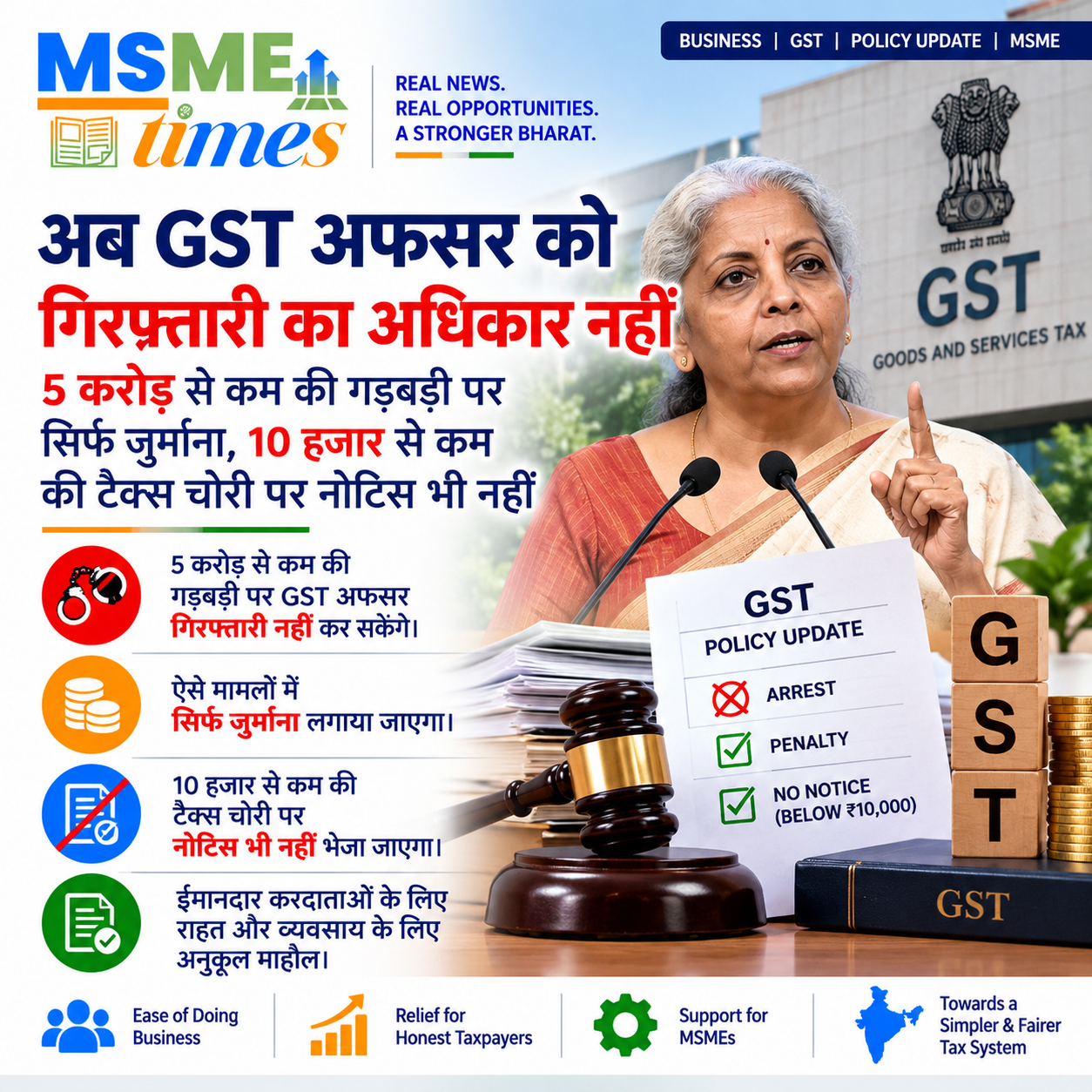
नई दिल्ली: GST compliance और tax enforcement को लेकर कारोबारियों और MSMEs के लिए बड़ा बदलाव सामने आया है। GST Council ने GST व्यवस्था में कई महत्वपूर्ण procedural और enforcement reforms की सिफारिश की है। इनमें सबसे अहम बदलाव GST के तहत arrest provisions को हटाना, prosecution threshold को ₹1 करोड़ से बढ़ाकर ₹5 करोड़ करना और ₹10,000 या उससे कम के monetary disputes पर notice जारी न करने का प्रस्ताव शामिल है। Press Information Bureau
इन बदलावों का उद्देश्य छोटे और मध्यम कारोबारियों के लिए GST compliance को आसान बनाना, अनावश्यक litigation कम करना और tax administration को अधिक predictable बनाना है।
GST में गिरफ्तारी के नियमों में बड़ा बदलाव
GST Council ने GST कानून के तहत tax officers की arrest powers को हटाने की सिफारिश की है। इसका मतलब यह है कि GST मामलों में enforcement का approach अब अधिक civil और compliance-oriented बनाने की दिशा में बढ़ रहा है। Press Information Bureau
यह बदलाव खासतौर पर उन कारोबारियों के लिए महत्वपूर्ण है जो GST compliance के दौरान notices, investigations और prosecution की प्रक्रिया को लेकर चिंतित रहते हैं।
हालांकि, इसका यह अर्थ नहीं है कि GST violations पर कार्रवाई पूरी तरह खत्म हो जाएगी। Tax authorities के पास assessment, recovery, penalties और अन्य कानूनी कार्रवाई के प्रावधान बने रहेंगे।
₹1 करोड़ से बढ़ाकर ₹5 करोड़ हुआ Prosecution Threshold
GST Council ने prosecution threshold को ₹1 करोड़ से बढ़ाकर ₹5 करोड़ करने की सिफारिश की है। इसका उद्देश्य छोटे और relatively lower-value मामलों को criminal prosecution के दायरे से बाहर रखना है। The Financial Express
यानी GST से जुड़े मामलों में ₹5 करोड़ से कम की tax-related discrepancy को लेकर prosecution का threshold काफी ऊपर चला जाएगा।
यह बदलाव MSMEs के लिए महत्वपूर्ण माना जा रहा है क्योंकि छोटी tax disputes के मामलों में criminal proceedings का जोखिम कम हो सकता है।
₹10,000 तक के मामलों में Notice नहीं
GST Council ने यह भी recommend किया है कि ₹10,000 या उससे कम की monetary amount वाले मामलों में notice जारी नहीं किया जाएगा। NDTV Profit
इसका उद्देश्य छोटे-value disputes को लेकर unnecessary paperwork और litigation को कम करना है।
छोटे कारोबारियों के लिए इसका सीधा फायदा यह हो सकता है कि मामूली tax differences के कारण उन्हें लंबी compliance प्रक्रिया से नहीं गुजरना पड़े।
General Penalty भी ₹25,000 से घटाकर ₹10,000
GST reforms के तहत general penalty को भी ₹25,000 से घटाकर ₹10,000 करने की सिफारिश की गई है। Press Information Bureau
यह कदम compliance burden कम करने और छोटे procedural defaults को अधिक proportionate तरीके से handle करने की दिशा में है।
MSMEs के लिए क्यों महत्वपूर्ण है यह बदलाव?
भारत के MSME sector में बड़ी संख्या में छोटे कारोबार GST framework के तहत काम करते हैं। कई बार technical errors, documentation issues या छोटे compliance differences के कारण businesses को notices और litigation का सामना करना पड़ता है।
नए proposed reforms के प्रमुख संभावित फायदे:
- छोटे disputes पर litigation कम होगा।
- Criminal prosecution का threshold बढ़ेगा।
- Tax administration में अधिक clarity आएगी।
- छोटे कारोबारियों का compliance burden कम हो सकता है।
- Working capital और business continuity को मदद मिल सकती है।
- Ease of Doing Business को बढ़ावा मिलेगा।
GST Council ने faster refunds, simplified registration और common standards for GST notices and proceedings जैसे अन्य reforms की भी सिफारिश की है। Press Information Bureau
GST Compliance पूरी तरह खत्म नहीं होगा
यह समझना जरूरी है कि इन reforms का मतलब GST compliance में छूट मिलना नहीं है। Businesses को अभी भी सही invoices, GST returns, input tax credit records और अन्य जरूरी documents maintain करने होंगे।
Tax evasion, fraud और गंभीर violations पर enforcement framework बना रहेगा। बदलाव मुख्य रूप से criminal enforcement और procedural burden को rationalise करने पर केंद्रित हैं।
GST 2.0 का बड़ा उद्देश्य
इन बदलावों को GST system को अधिक technology-driven, transparent और business-friendly बनाने की दिशा में एक बड़े कदम के रूप में देखा जा रहा है।
Council ने refunds को faster बनाने, registration और compliance processes को simplify करने तथा GST notices और proceedings के लिए common standards विकसित करने की भी सिफारिश की है। The Financial Express
निष्कर्ष
GST arrest rules 2026 में प्रस्तावित बदलाव MSMEs और छोटे कारोबारियों के लिए महत्वपूर्ण हैं। Arrest powers को हटाने, prosecution threshold को ₹5 करोड़ तक बढ़ाने और ₹10,000 तक के मामलों में notices को हटाने जैसे कदम छोटे disputes को लेकर compliance pressure और litigation को कम कर सकते हैं।
हालांकि, businesses के लिए GST compliance, accurate reporting और proper documentation अभी भी बेहद जरूरी रहेगा।
Note: ये GST Council की recommendations हैं; लागू होने की तारीख और final legal implementation संबंधित notifications/amendments पर निर्भर करेगी।
FAQs
Q1. क्या GST officers की arrest power खत्म हो गई है?
GST Council ने GST के तहत arrest provisions हटाने की सिफारिश की है। इसके लिए संबंधित legal implementation जरूरी होगा। Press Information Bureau
Q2. GST prosecution threshold कितना किया गया है?
Prosecution threshold को ₹1 करोड़ से बढ़ाकर ₹5 करोड़ करने की सिफारिश की गई है।
Q3. ₹10,000 से कम GST मामले में क्या होगा?
Council ने ₹10,000 या उससे कम monetary amounts वाले मामलों में notice जारी न करने की recommendation की है।
Q4. क्या MSMEs को GST filing से छूट मिलेगी?
नहीं। GST returns, invoices और अन्य compliance requirements अभी भी लागू रहेंगी।