India Retail Inflation Rises to 4.82% in August: Food Inflation Hits 5.95%, RBI Rate Hike in Focus
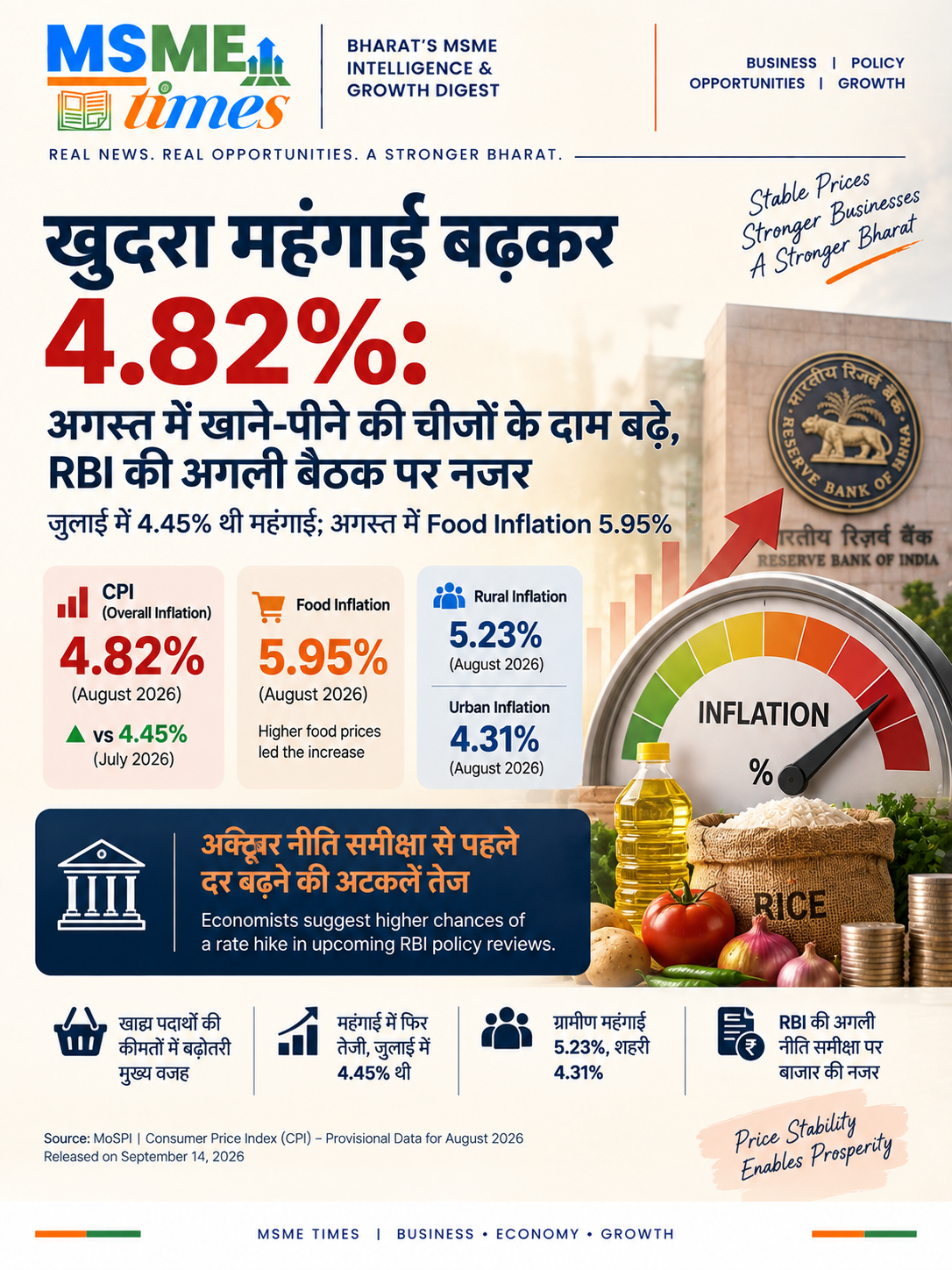
India’s retail inflation accelerated sharply in August 2026, rising to 4.82% from 4.45% in July. The latest Consumer Price Index data released by the Ministry of Statistics and Programme Implementation shows that higher food prices were a major contributor, with food inflation rising to 5.95% in August.
The rise has brought renewed attention to the Reserve Bank of India’s monetary policy outlook. Some economists now see a greater possibility of a rate increase in upcoming policy reviews, although the timing remains uncertain and will depend on whether inflationary pressures persist.
India Retail Inflation August 2026: Key Numbers
According to the government’s provisional CPI data:
- Headline retail inflation: 4.82%
- July 2026 inflation: 4.45%
- Food inflation: 5.95%
- Rural inflation: 5.23%
- Urban inflation: 4.31%
The August inflation rate was therefore higher than July and above the RBI’s medium-term 4% target.
Food Inflation Rises to 5.95%
Food prices were an important factor behind the increase.
Food inflation, measured through the Consumer Food Price Index, increased to 5.95% in August from 5.52% in July. Rural food inflation stood at 6.13%, while urban food inflation was 5.64%.
Higher food prices matter significantly for Indian households because food carries a substantial weight in the consumer price basket.
Recent reports have pointed to price increases in products including ginger, onions, garlic and other food items as contributors to the rise.
Rural Inflation Higher Than Urban Inflation
The inflation data also shows a noticeable difference between rural and urban areas.
In August:
Rural inflation: 5.23%
Urban inflation: 4.31%
The higher rural inflation rate means households in rural areas faced greater price pressure than their urban counterparts during the month.
This can have implications for household consumption, especially when food prices rise.
Why Is the RBI Watching Inflation Closely?
Price stability is one of the central considerations in monetary policy.
The RBI’s medium-term inflation target is 4%, with a tolerance band of 2% to 6%.
August’s 4.82% inflation remains within the broader tolerance band but is above the 4% target.
Reuters reported that August marked the third consecutive month in which inflation remained above the RBI’s 4% medium-term target.
The concern for policymakers increases if higher inflation becomes broad-based rather than remaining limited to temporary food-price movements.
Could RBI Raise Interest Rates?
The latest inflation data has increased expectations of a possible RBI rate hike.
Reuters reported that the August inflation reading strengthened the case for a rate increase, while some economists have considered whether a hike could come as early as October.
The upcoming Monetary Policy Committee meeting scheduled for October 5-7, 2026 is therefore attracting increased attention.
However, a rate hike is not certain.
The RBI will have to assess:
- Food inflation
- Global crude oil prices
- Core inflation
- Rupee movement
- Domestic economic growth
- Inflation expectations
- Global monetary policy
before making its decision.
Why Higher Inflation Can Affect Interest Rates
When inflation remains elevated, central banks can use higher interest rates to reduce demand and prevent price pressures from becoming entrenched.
Higher borrowing costs can discourage excessive credit growth and spending.
But there is a trade-off.
Higher interest rates can also increase borrowing costs for:
- Businesses
- Homebuyers
- Vehicle buyers
- MSMEs
- Consumers
Therefore, monetary policy decisions require a balance between price stability and economic growth.
What Does Inflation Mean for MSMEs?
Inflation can affect MSMEs through several channels.
Higher input prices can increase the cost of:
- Raw materials
- Transportation
- Packaging
- Electricity
- Labour
- Inventory
- Working capital
If businesses are unable to pass these higher costs to customers, profit margins can come under pressure.
For MSMEs dependent on bank loans or working-capital facilities, any future increase in policy rates could also eventually affect borrowing costs.
Impact on Consumers
Higher retail inflation can reduce consumers’ purchasing power.
If food, transportation and essential goods become more expensive, households may have less disposable income available for discretionary spending.
This can eventually influence demand for products and services across sectors.
For businesses, especially consumer-facing MSMEs, this makes inflation an important factor in pricing and sales planning.
Food Prices Remain the Key Risk
The government’s August data shows food inflation at 5.95%, making food prices one of the most important factors to monitor.
The Chief Economic Adviser, V. Anantha Nageswaran, has said the elevated food inflation is not expected to persist through the end of the year and described the situation as manageable, while pointing to expectations of positive crop output.
That view highlights an important uncertainty: whether the August increase represents a temporary food-price shock or the beginning of a broader inflationary trend.
Global Oil Prices Add Another Risk
Global energy prices are another factor that could influence India’s inflation outlook.
India imports a large share of its crude oil requirements. Higher global crude prices can raise transportation and production costs, potentially affecting prices across the economy.
Reuters reported that elevated global oil prices had increased concerns about additional inflationary pressure.
What Should Businesses Watch?
Businesses should monitor inflation because it can affect both costs and demand.
MSMEs can focus on:
- Reviewing supplier contracts.
- Monitoring raw material prices.
- Managing inventory efficiently.
- Avoiding unnecessary working-capital costs.
- Reviewing pricing strategies.
- Negotiating longer-term supplier agreements.
- Monitoring borrowing costs.
- Maintaining sufficient cash-flow buffers.
These steps can help businesses manage periods of higher price volatility.
Inflation and the RBI’s October Policy Review
The October MPC meeting will be particularly important for markets because August inflation has changed expectations around the RBI’s next policy move.
Some economists expect the RBI to consider a rate increase, while other analysis suggests policymakers may wait to see whether current inflation pressures prove temporary.
The actual decision will depend on the complete economic data available to the MPC at the time.
Conclusion
India retail inflation August 2026 data shows that price pressures have strengthened after a period of relatively softer inflation.
Retail inflation increased to 4.82%, compared with 4.45% in July, while food inflation reached 5.95%.
The rise has increased attention on the RBI’s upcoming monetary policy decisions. Economists and markets are considering the possibility of a rate hike, particularly if inflation remains elevated or global oil prices add further pressure.
For consumers and MSMEs, the key issue will be whether the rise in inflation remains temporary or develops into a broader and more persistent price trend.
FAQs
What was India’s retail inflation in August 2026?
India’s retail CPI inflation was 4.82% in August 2026, compared with 4.45% in July.
What was food inflation in August 2026?
Food inflation was 5.95% in August 2026.
Will RBI definitely increase interest rates?
No. A rate hike is currently an expectation among some economists and market participants, but the RBI’s decision will depend on the overall inflation and economic outlook.
Why does inflation affect MSMEs?
Higher inflation can increase raw material, logistics, labour, energy and financing costs, potentially putting pressure on MSME margins.