
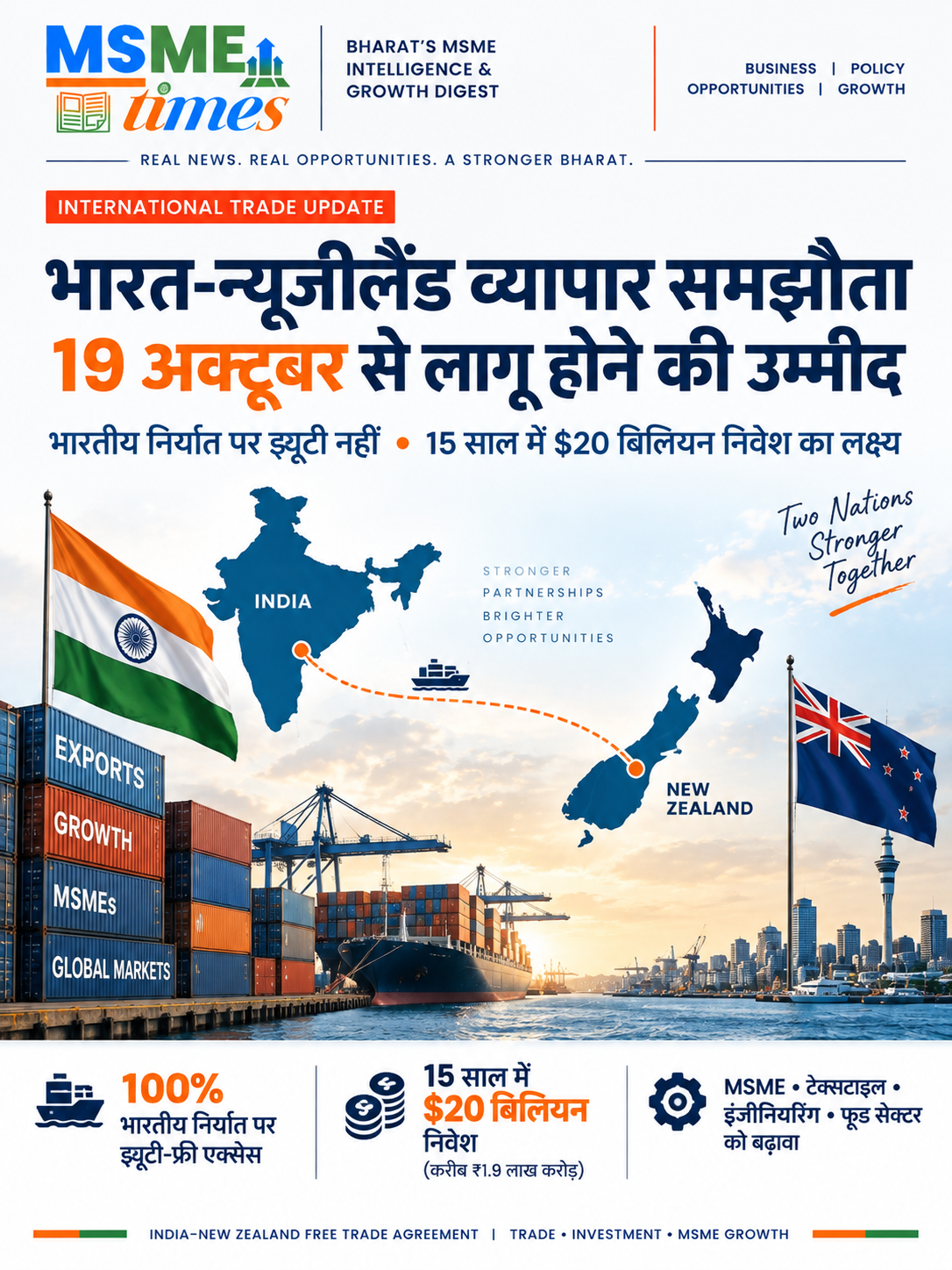
भारत और न्यूजीलैंड के बीच हुआ Free Trade Agreement (FTA) अब implementation के अगले चरण में पहुंच गया है। भारत-न्यूजीलैंड व्यापार समझौते के 19 अक्टूबर 2026 से लागू होने की संभावना है। दोनों देशों ने इस FTA पर 27 अप्रैल 2026 को हस्ताक्षर किए थे।
इस trade agreement को भारत के exporters और MSMEs के लिए महत्वपूर्ण माना जा रहा है क्योंकि agreement के तहत New Zealand भारतीय exports के 100% tariff lines पर duty-free market access देगा। इसके अलावा न्यूजीलैंड ने भारत में USD 20 billion यानी करीब ₹1.9 लाख करोड़ के investment commitment का लक्ष्य रखा है।भारत-न्यूजीलैंड FTA 19
India New Zealand FTA कब लागू होगा?
India-New Zealand FTA पर दोनों देशों ने 27 अप्रैल 2026 को हस्ताक्षर किए थे। सितंबर 2026 में officials की ओर से agreement के 19 अक्टूबर से लागू होने की संभावना बताई गई है।
FTA के लागू होने के बाद दोनों देशों के बीच goods और services trade को बेहतर market access मिलेगा और कई products पर tariffs कम या खत्म होंगे।
भारतीय exports को क्या फायदा होगा?
इस FTA की सबसे बड़ी विशेषता भारतीय exports के लिए duty-free access है।
भारत सरकार के अनुसार New Zealand भारत के 100% exports को duty-free market access देगा। इसका मतलब है कि Indian exporters को New Zealand market में tariff advantage मिलेगा।
इससे खासकर labour-intensive sectors को फायदा मिलने की उम्मीद है।
किन sectors को सबसे ज्यादा फायदा होगा?
FTA के तहत कई Indian industries के लिए opportunities बढ़ सकती हैं।
मुख्य sectors हैं:
- Textiles
- Apparel
- Leather
- Footwear
- Engineering goods
- Gems and jewellery
- Processed food
- Chemicals
- Electronics
- Manufacturing
- Pharmaceutical sector
भारत सरकार ने विशेष रूप से textiles, leather, footwear, engineering goods और processed food जैसे labour-intensive sectors को प्रमुख beneficiaries में रखा है।
MSMEs के लिए क्यों महत्वपूर्ण है India New Zealand FTA?
MSMEs भारत के export ecosystem का बड़ा हिस्सा हैं। लेकिन छोटे exporters के लिए foreign markets में tariff, compliance, logistics और competition बड़ी challenges होती हैं।
यदि Indian products को New Zealand market में duty-free access मिलता है, तो exporters की landed cost और price competitiveness बेहतर हो सकती है।
उदाहरण के लिए एक Indian textile या engineering MSME को यदि पहले tariff cost के कारण price disadvantage का सामना करना पड़ता था, तो tariff elimination के बाद वह New Zealand buyers के साथ ज्यादा competitive pricing कर सकता है।
सरकार ने भी इस agreement को MSMEs और employment के लिए beneficial बताया है।
New Zealand भारत में कितना निवेश करेगा?
FTA के तहत New Zealand की ओर से USD 20 billion investment commitment रखा गया है।
भारतीय मुद्रा में यह लगभग ₹1.9 लाख करोड़ के आसपास बैठता है, हालांकि actual rupee value exchange rate के अनुसार बदलती रहेगी।
Investment agriculture, manufacturing, infrastructure, startups, innovators और emerging technologies जैसे क्षेत्रों में opportunities बढ़ाने के उद्देश्य से जुड़ा है।
क्या यह सिर्फ export agreement है?
नहीं।
India New Zealand FTA केवल goods exports तक सीमित नहीं है। इसमें services, investment, professional mobility और economic cooperation से जुड़े provisions भी हैं।
New Zealand की government के अनुसार agreement उसके exporters को India के बड़े और growing market तक बेहतर access देगा।
New Zealand को भारत से क्या फायदा होगा?
Trade agreement दोनों देशों के लिए reciprocal benefits पैदा करता है।
New Zealand को Indian market में अपने products और services के लिए बेहतर access मिलेगा। New Zealand की Ministry of Foreign Affairs and Trade के अनुसार FTA fully implemented होने पर उसके current exports का करीब 95% tariff-free या significantly reduced tariff access प्राप्त करेगा।
इसमें forestry, wool, seafood, food products और अन्य goods शामिल हैं।
भारत ने किन sectors को protect किया है?
भारत ने agreement में अपने sensitive sectors को पूरी तरह open नहीं किया है।
भारत सरकार के अनुसार dairy और कई sensitive agricultural products को market-access commitments से बाहर रखा गया है। इनमें milk, cream, cheese, yoghurt, whey, onions, sugar, spices और कुछ अन्य products शामिल हैं।
इसका उद्देश्य domestic farmers और sensitive sectors को अचानक import competition से बचाना है।
Manufacturing को कैसे फायदा होगा?
FTA सिर्फ finished products के exports को फायदा नहीं देता। भारत को कुछ manufacturing inputs पर भी duty-free access मिलेगा।
Government के अनुसार wooden logs, coking coal और metal waste तथा scraps जैसे inputs पर duty-free access manufacturing competitiveness को support कर सकता है।
इससे Indian manufacturers की input costs को कम करने और supply chains को मजबूत करने में मदद मिल सकती है।
Engineering MSMEs के लिए opportunity
Engineering goods भारत के महत्वपूर्ण export sectors में से एक हैं।
Government data के अनुसार FY2024-25 में India’s engineering exports लगभग USD 77.5 billion रहे। इसी अवधि में New Zealand को Indian engineering exports करीब USD 68.26 million रहे। FTA के तहत कई engineering tariff lines पर earlier duties को हटाया गया है।
इससे Indian engineering MSMEs को New Zealand market में expansion का अवसर मिल सकता है।
Textile और apparel exporters के लिए क्या बदलेगा?
Textile और apparel sector भारत के employment-intensive industries में से है।
New Zealand market में Indian textile products को zero-duty access मिलने से Indian exporters की price competitiveness बढ़ सकती है।
सरकार के अनुसार textiles and clothing में पहले कुछ products पर tariff 10% तक था, जिसे FTA के तहत eliminate किया गया है।
Food processing industry को फायदा
Processed food भी FTA से लाभ लेने वाले sectors में शामिल है।
Indian food-processing MSMEs के लिए New Zealand एक premium market हो सकता है। Duty-free access से Indian products की pricing बेहतर हो सकती है और exporters को new buyers तक पहुंच बनाने का अवसर मिल सकता है।
हालांकि food exports के लिए tariff के अलावा food safety, packaging, certification और regulatory compliance भी महत्वपूर्ण रहेंगे।
Services sector के लिए नया market
FTA में services sector भी महत्वपूर्ण है।
New Zealand ने India के लिए services और professional opportunities को expand करने के provisions शामिल किए हैं। Government के अनुसार agreement में 118 service sectors से जुड़े opportunities का उल्लेख है।
इससे Indian professionals, service companies, startups और technology businesses को New Zealand market में expansion के अवसर मिल सकते हैं।
Skilled professionals और students के लिए क्या फायदा?
Agreement में professional mobility और student pathways से जुड़े provisions भी हैं।
भारत सरकार के अनुसार STEM graduates और skilled professionals के लिए post-study work और professional pathways को बढ़ावा देने की व्यवस्था है। इसके अलावा 5,000 occupations के लिए dedicated Temporary Employment Entry visa quota का भी उल्लेख किया गया है।
यह services trade और talent mobility को मजबूत कर सकता है।
India-New Zealand trade अभी कितना है?
New Zealand Ministry of Foreign Affairs and Trade के अनुसार दोनों देशों के बीच two-way total trade करीब NZ$3.95 billion annually है।
इससे संकेत मिलता है कि दोनों economies के आकार की तुलना में bilateral trade में अभी काफी growth potential मौजूद है।
FTA का उद्देश्य इसी untapped potential को expand करना है।
MSMEs को क्या करना चाहिए?
Indian MSMEs को FTA लागू होने के बाद केवल tariff benefit पर निर्भर नहीं रहना चाहिए।
Export-oriented businesses को:
- New Zealand market की demand identify करनी चाहिए।
- HS codes और applicable tariff rules check करने चाहिए।
- Product certification requirements समझनी चाहिए।
- Packaging और labelling standards की जांच करनी चाहिए।
- Local distributors और buyers तलाशने चाहिए।
- Digital B2B platforms का इस्तेमाल बढ़ाना चाहिए।
- Export documentation मजबूत करना चाहिए।
- Logistics cost का calculation करना चाहिए।
- Currency risk को समझना चाहिए।
- Long-term New Zealand partnerships पर focus करना चाहिए।
India New Zealand FTA से भारत की export strategy को क्या फायदा?
भारत लगातार नए FTAs के माध्यम से अपने exporters के लिए international markets खोलने की कोशिश कर रहा है।
New Zealand agreement Indian businesses को एक developed, high-income market में बेहतर tariff access देता है।
यह खासकर उन MSMEs के लिए महत्वपूर्ण है जो global supply chains में प्रवेश करना चाहते हैं।
Challenges भी रहेंगी
FTA का मतलब यह नहीं है कि exports अपने आप बढ़ जाएंगे।
Indian exporters को अभी भी:
- quality standards,
- logistics,
- shipping costs,
- certifications,
- delivery timelines,
- product branding,
- foreign exchange risk
जैसी challenges का सामना करना पड़ेगा।
New Zealand market में established global suppliers के साथ competition भी रहेगा।
इसलिए tariff advantage को business strategy, quality और market research के साथ जोड़ना जरूरी होगा।
निष्कर्ष
India New Zealand FTA भारत के exporters, MSMEs और manufacturing sector के लिए एक महत्वपूर्ण opportunity बन सकता है।
Agreement के तहत New Zealand भारतीय exports को 100% duty-free access देने के लिए प्रतिबद्ध है और USD 20 billion investment commitment भारत में agriculture, manufacturing, infrastructure, startups और emerging technologies जैसे क्षेत्रों में opportunities को support कर सकता है।
19 अक्टूबर 2026 से agreement लागू होने की उम्मीद के साथ अब असली focus implementation पर होगा।
यदि Indian MSMEs इस opportunity का फायदा उठाने के लिए quality, compliance, branding और international distribution पर focus करते हैं, तो New Zealand market उनके लिए नए export opportunities का महत्वपूर्ण source बन सकता है।
FAQs
India New Zealand FTA कब लागू होगा?
भारत-न्यूजीलैंड FTA के 19 अक्टूबर 2026 से लागू होने की संभावना है।
India New Zealand FTA में भारतीय exports को क्या फायदा मिलेगा?
New Zealand भारत के 100% exports को duty-free market access देने के लिए प्रतिबद्ध है।
New Zealand भारत में कितना निवेश करेगा?
Agreement में USD 20 billion investment commitment है, जो लगभग ₹1.9 लाख करोड़ के बराबर है, exchange rate के आधार पर।
कौन से Indian sectors सबसे ज्यादा लाभ उठा सकते हैं?
Textiles, apparel, leather, footwear, engineering goods, processed food, chemicals और अन्य labour-intensive sectors को महत्वपूर्ण opportunities मिल सकती हैं।
क्या India ने dairy sector को FTA में पूरी तरह खोल दिया है?
नहीं। India ने dairy और कई sensitive agricultural products को protection देने के लिए market-access commitments से बाहर रखा है।