New startup cycle moves beyond quick apps toward technology capability and profitable brands
The startup ecosystem in Bharat is entering a different phase of expansion in 2026.
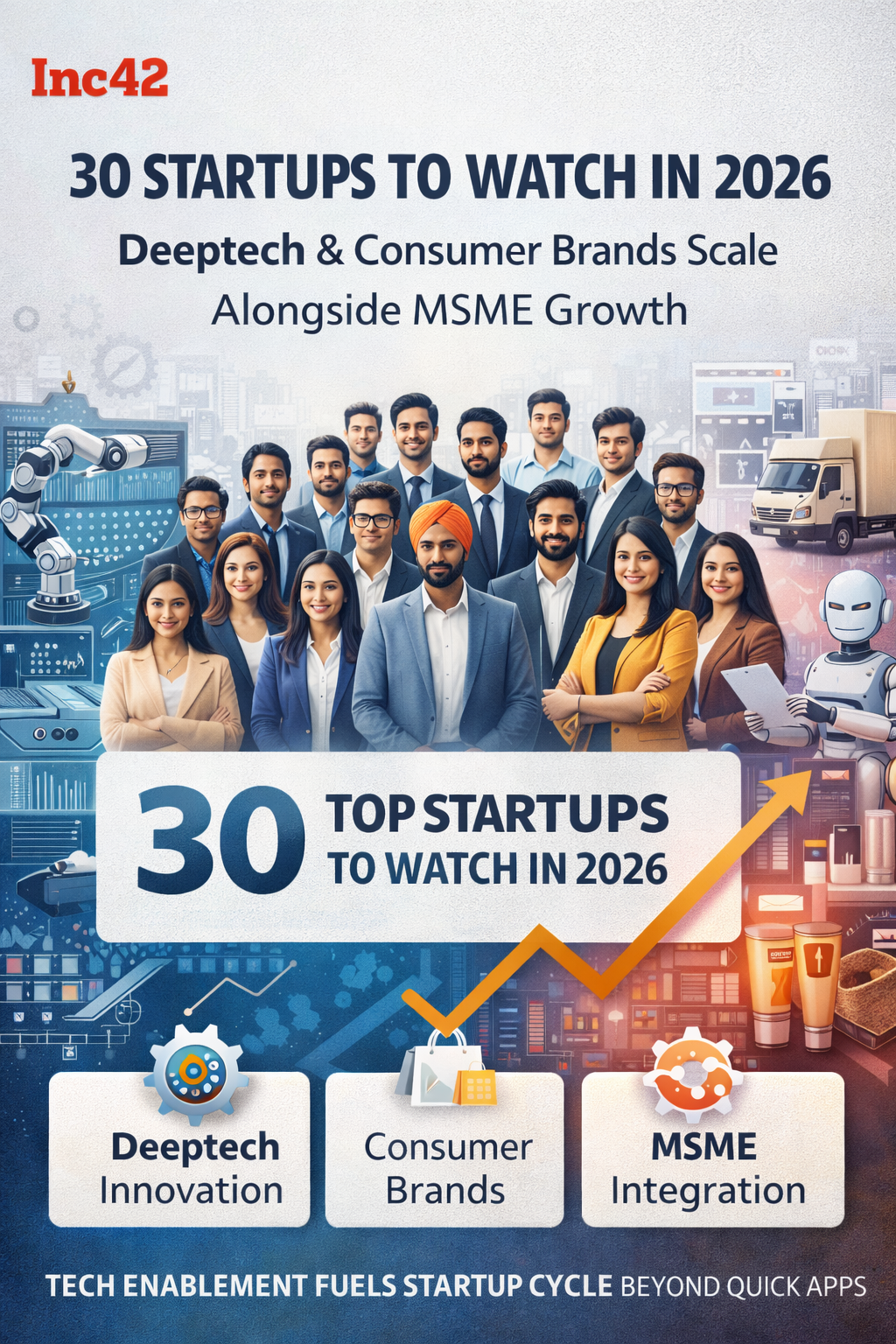
According to a latest ecosystem tracking list, around 30 emerging startups are being closely watched this year — and the pattern shows a clear shift: founders are building deeper technology and sustainable consumer businesses instead of hypergrowth-only models.
Unlike earlier funding cycles dominated by delivery apps and discount marketplaces, the current batch includes companies working in manufacturing technology, AI infrastructure, logistics optimisation and specialised consumer brands connected to the MSME supply chain.
What stands out in the 2026 startup cohort
The new wave reflects a maturing ecosystem where startups are increasingly integrated with real economic activity rather than only digital consumption.
Key themes emerging:
- Deeptech innovation (AI, hardware, industrial tech)
- D2C brands built on local manufacturing networks
- B2B platforms enabling small businesses
- Supply-chain and logistics intelligence
Many of these startups depend on MSMEs for production, fulfilment and distribution — making the sector a growth partner rather than a disruption target.
Why this matters
The startup sector is no longer separate from traditional business.
It is becoming an extension of it.
Earlier cycle: startups replaced intermediaries
Current cycle: startups upgrade productivity
As MSMEs formalise and digitise, startups are building tools and brands on top of that infrastructure.
The broader signal
The ecosystem is moving toward real economy integration:
- Manufacturing linked brands
- Technology linked operations
- Data linked decision making
This suggests slower hype cycles but stronger long-term sustainability.